VYV solutions in action
Each case study highlights an offering of services to realize their intent.
- Design and engineering
- Production
- So your team can run it
- After opening night
Case studies
Five kinds of show, each with its own requests and constraints, and how we met them.
Architectural mapping
A canvas nobody built to be a screen.
Facades measured in thousands of pixels, geometry no one drew for projection, and stone you may not drill into. The surface sets the rules.
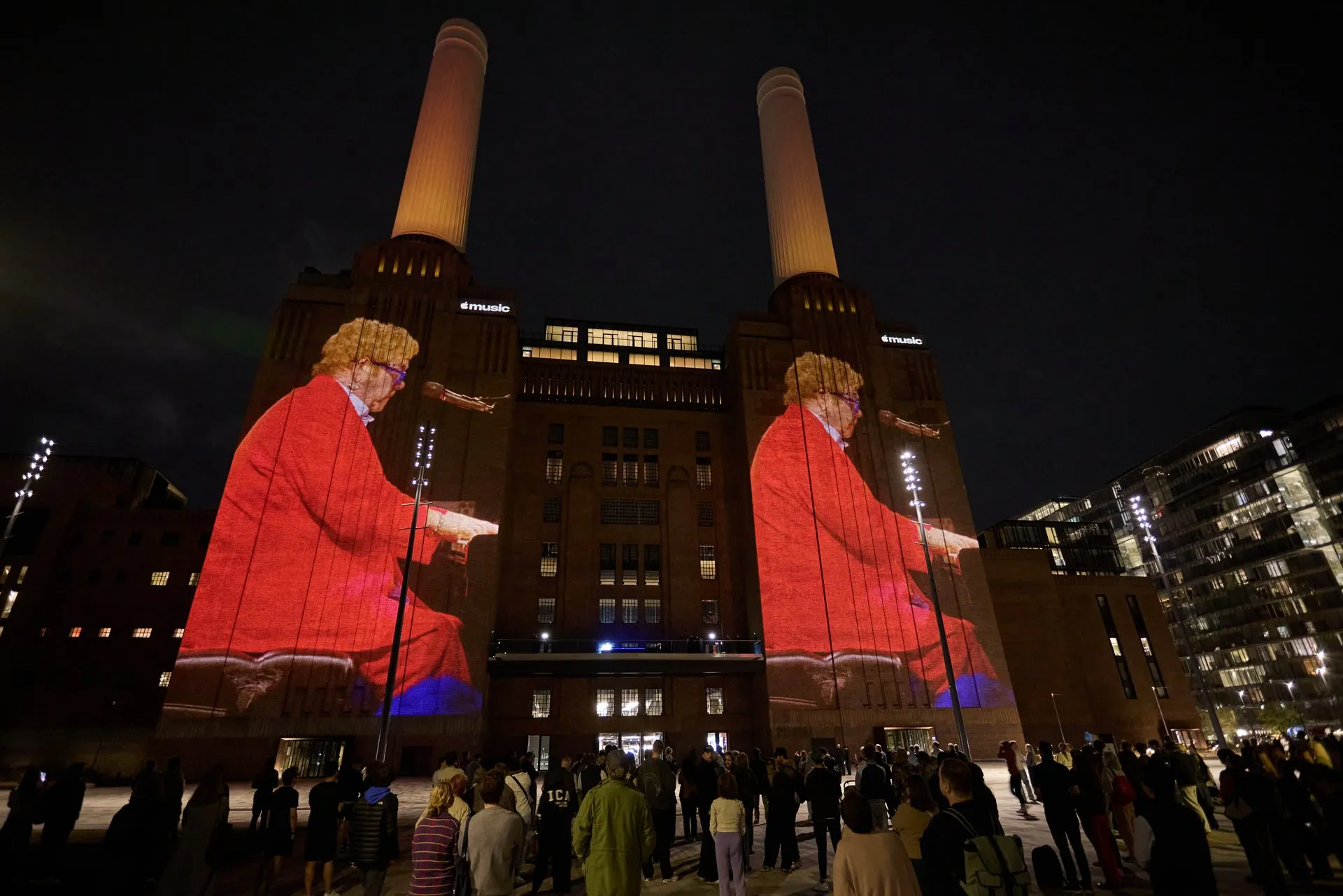
Photo: Alberto Romano
Apple Music Hall opening night
The opening night of the Apple Music Hall, inside Battersea Power Station, London, on 28 September 2026.
- Client
- Creative Technology
- Surface
- Battersea Power Station, London Facade and chimneys for a total of 48,572 sq ft (4,513 m²) of projection surface
- Technology
- PHOTON on 5 servers 24 projectors 12 cameras 6 COPERNIC emitters A live 4K feed from the concert 130 GB of content
- Calibration
- 4 min for all projectors
- Collaborators
- Done+Dusted (Production) 59 Productions (Content) Squint/Opera (Design and Direction) Creative Technology (Integrator)
- VYV services
The challenges
What we did
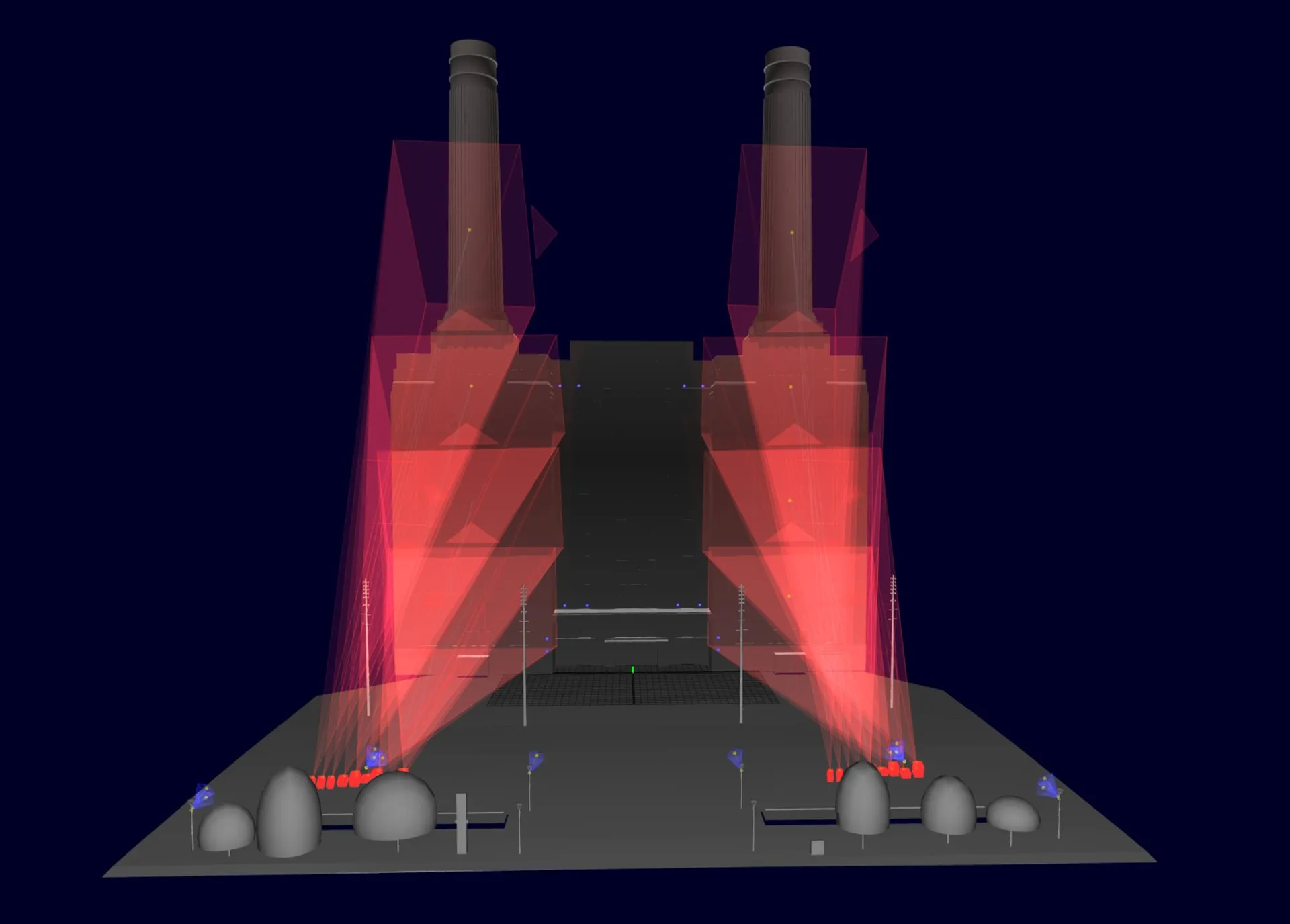
Rig twenty-four projectors in a public square, around a building no one drew for projection.
Projection study. Every projector was placed and aimed on the model of the power station before one was rigged.
Project onto a landmark in the middle of London that does not go dark for rehearsal: four hours of projection allowed a night, so every alignment night counted.
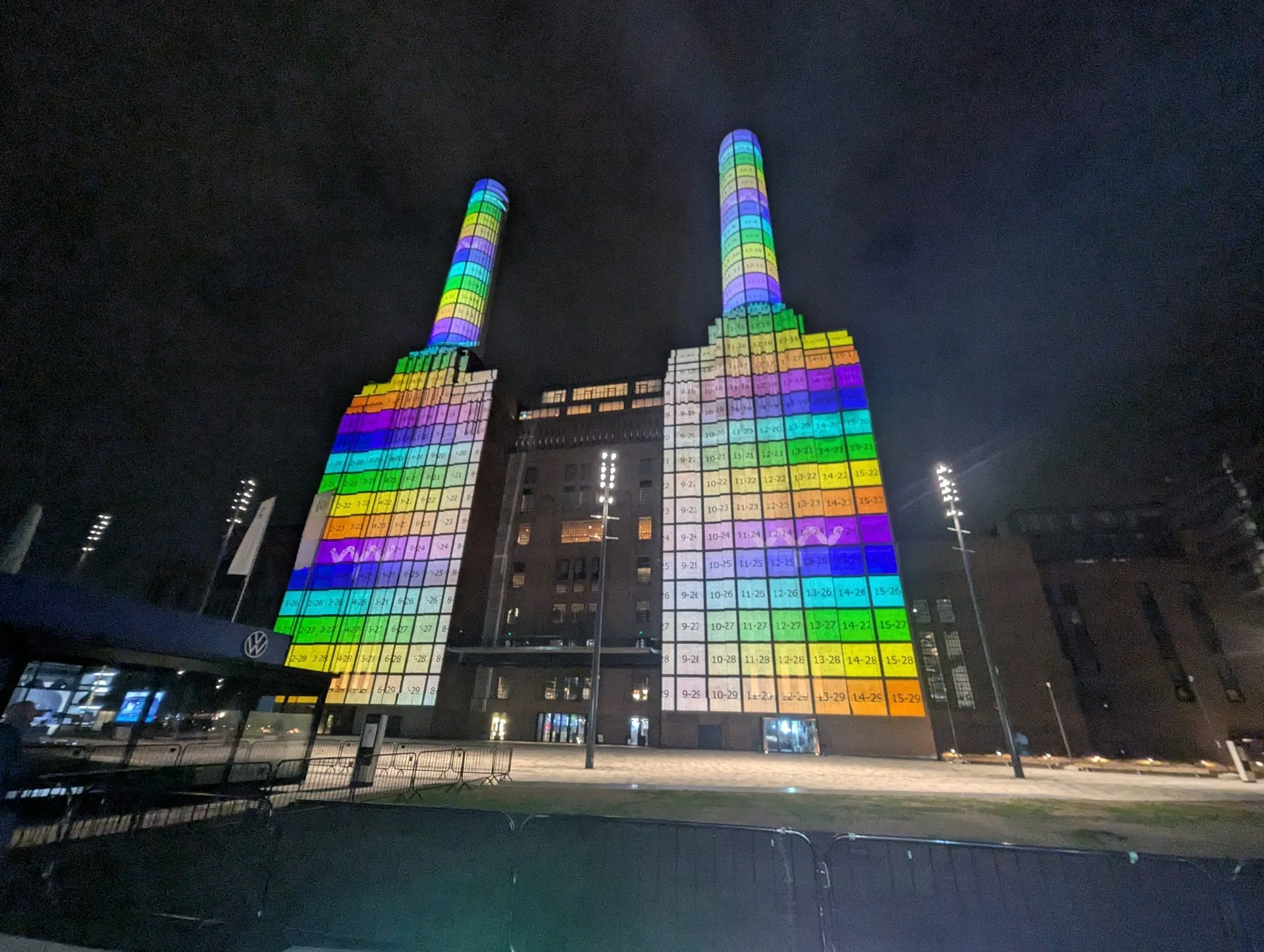
Four-minute calibration. Twelve cameras put all twenty-four projectors back in place in four minutes, inside those four hours.
Carry an hour of Elton John live, inside a three-hour programme, onto the facade as it happened.
Live feed into the mapping. A 4K feed from the concert mapped onto the brick as it happened, on the same surfaces as the recorded content.
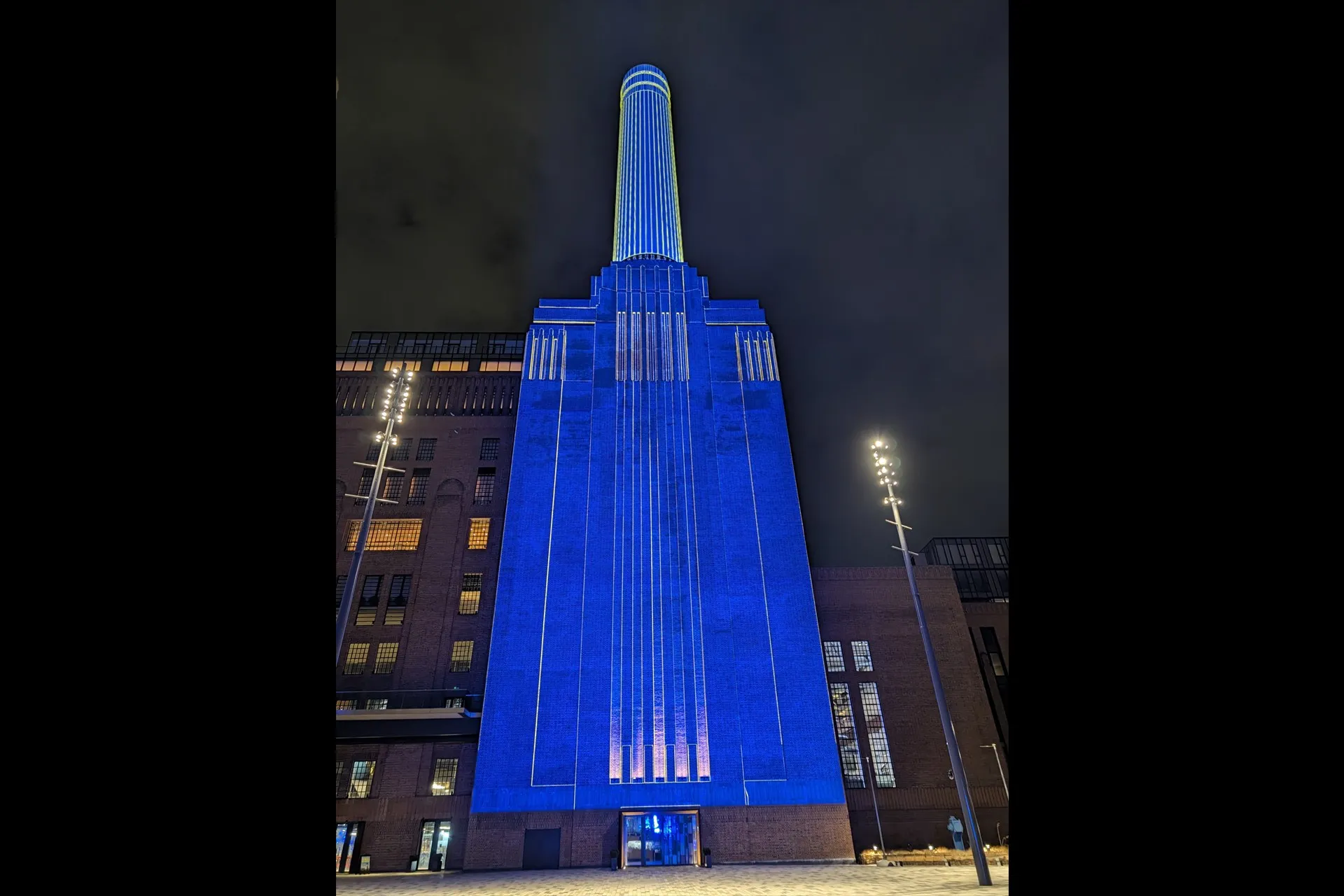
Seen from across the river, being a few centimetres off means a broken line on a building everyone knows.
Model and UV Optimization. The 3D models and their UV maps were refined until the image sat on the brick as if it had been printed there.
Why these choices
A must-get-right on the night. A challenging surface and tight operating restrictions used to mean no sleep and a lot of stress; with PHOTON, it’s now a joy.
Behind the scenes
Touring
A show that keeps evolving.
Ideas can arrive between the morning and the afternoon, the city changes every week, and the system has to keep up.
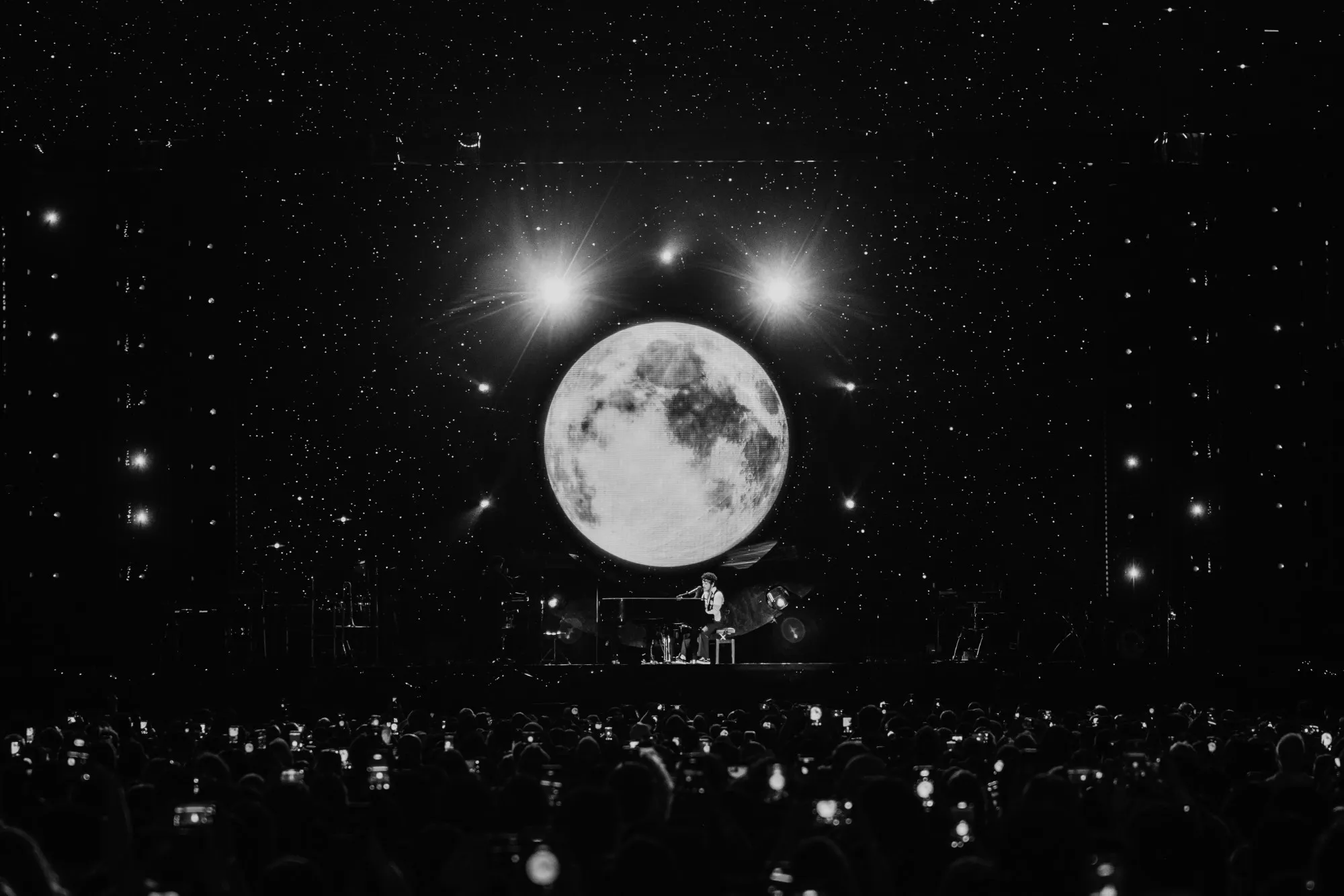
Photo credit: Bruno Mars Production, Photographer: Daniel Ramos
The Romantic Tour
Bruno Mars’s world stadium tour, with ideas from Bruno Mars himself and lighting designer Whitney Hoversten.
- Client
- Bruno Mars
- Surface
- 5 screens for a total of 7,803 sq ft (725 m²) of LED displays
- Technology
- PHOTON on 4 servers Live feeds from the Video Director AI-enabled live video effects Live interactive control surfaces for video manipulation
- Collaborators
- Bruno Mars (Creative Concept) Whitney Hoversten (Lighting & Visual Design) Steve Fatone (Video Director) Drop the Spoon (Lead Content Design Studio) Daniel Ramos (Additional Content) Jo Murayama (Additional Content)
- VYV services
The challenges
What we did
Each idea had to be seen on stage before a decision: try it, see it, keep it or move on to the next.
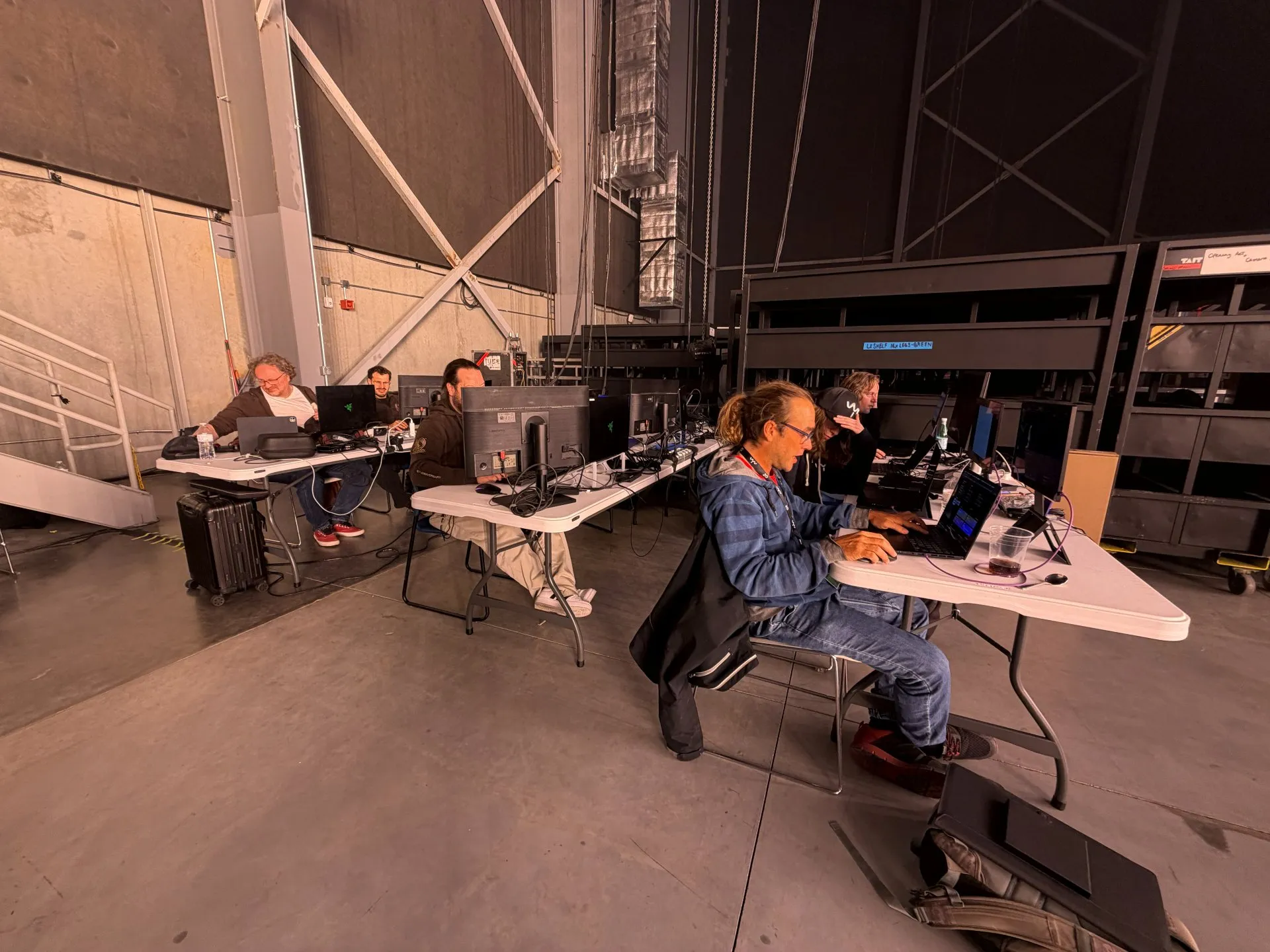
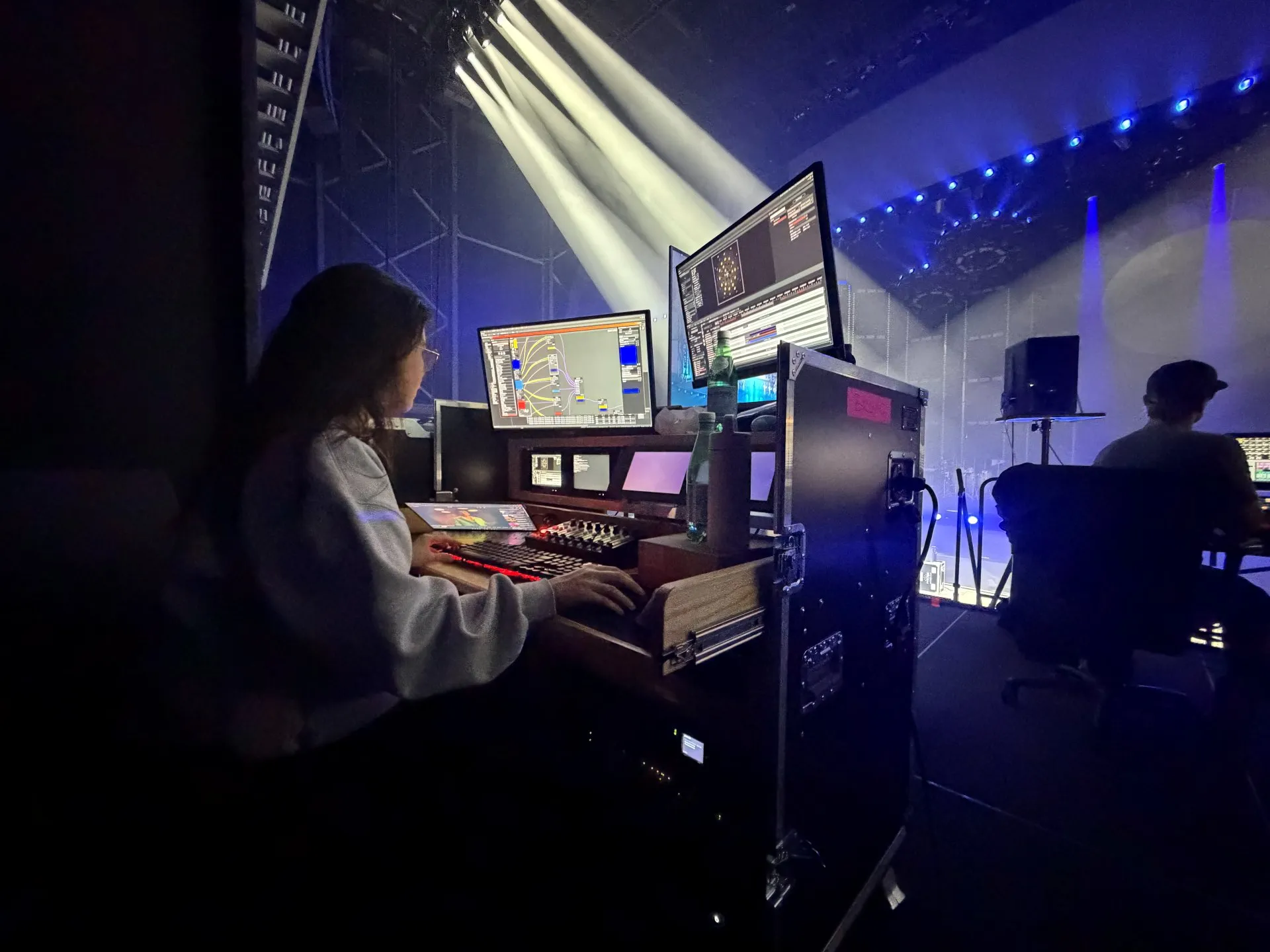
Developers and programmers in the room. VYV’s software developers and show programmers were on site through rehearsals, building what the creative team needed as the need appeared.
Let the video director fire effects on the camera feeds when the moment called for it.
IMAG effects from the video console. Video director Steve Fatone fired effects on the camera feeds from his own console.
Reprogram looks without stopping the production around them.
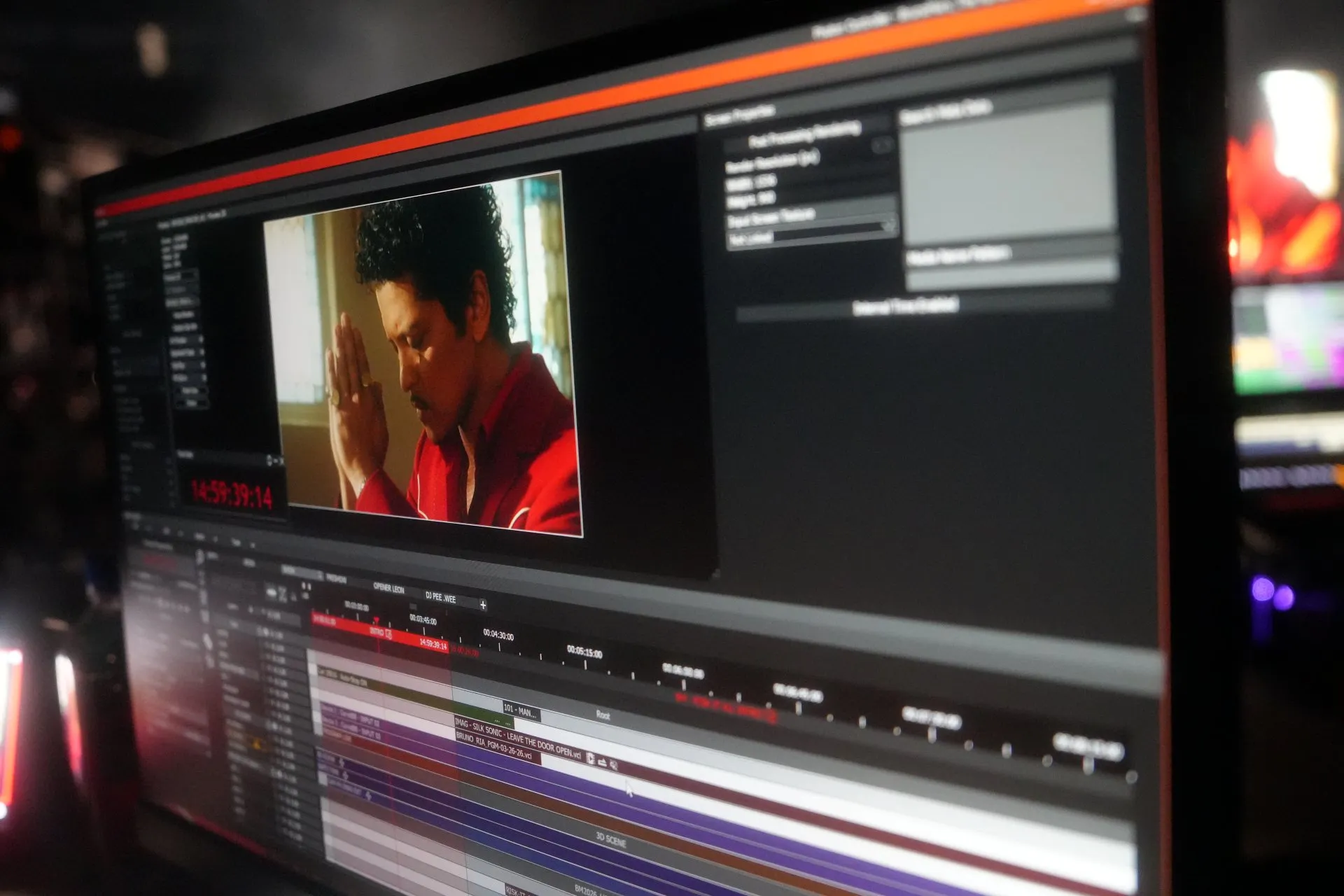
Recorded and live, mixed. Pre-rendered content and live video, switched or mixed.
Why these choices
A tour still taking shape in rehearsals calls for a system that keeps pace with the ideas. With PHOTON’s developers and show programmers in the room, each new idea from the creative team could quickly be on stage, so no one had to choose between an idea and the schedule. On the road, the same flexibility let the video director shape each show live.
Behind the scenes
In their words
Whether it was a concept from Bruno, myself, or anyone else on the creative team, VYV and Drop the Spoon were able to make it happen, often in a matter of minutes.
Their system is built in a way that allows us to quickly iterate things from our computers directly, and we can also work with modular things, create small little bricks that we assemble into the media server directly.
Large-scale events
One night. No second take.
A large-scale event happens once, in front of everyone. When the unexpected eats into rehearsal time, a creative fix nobody would keep for a season can be what makes the night unforgettable.
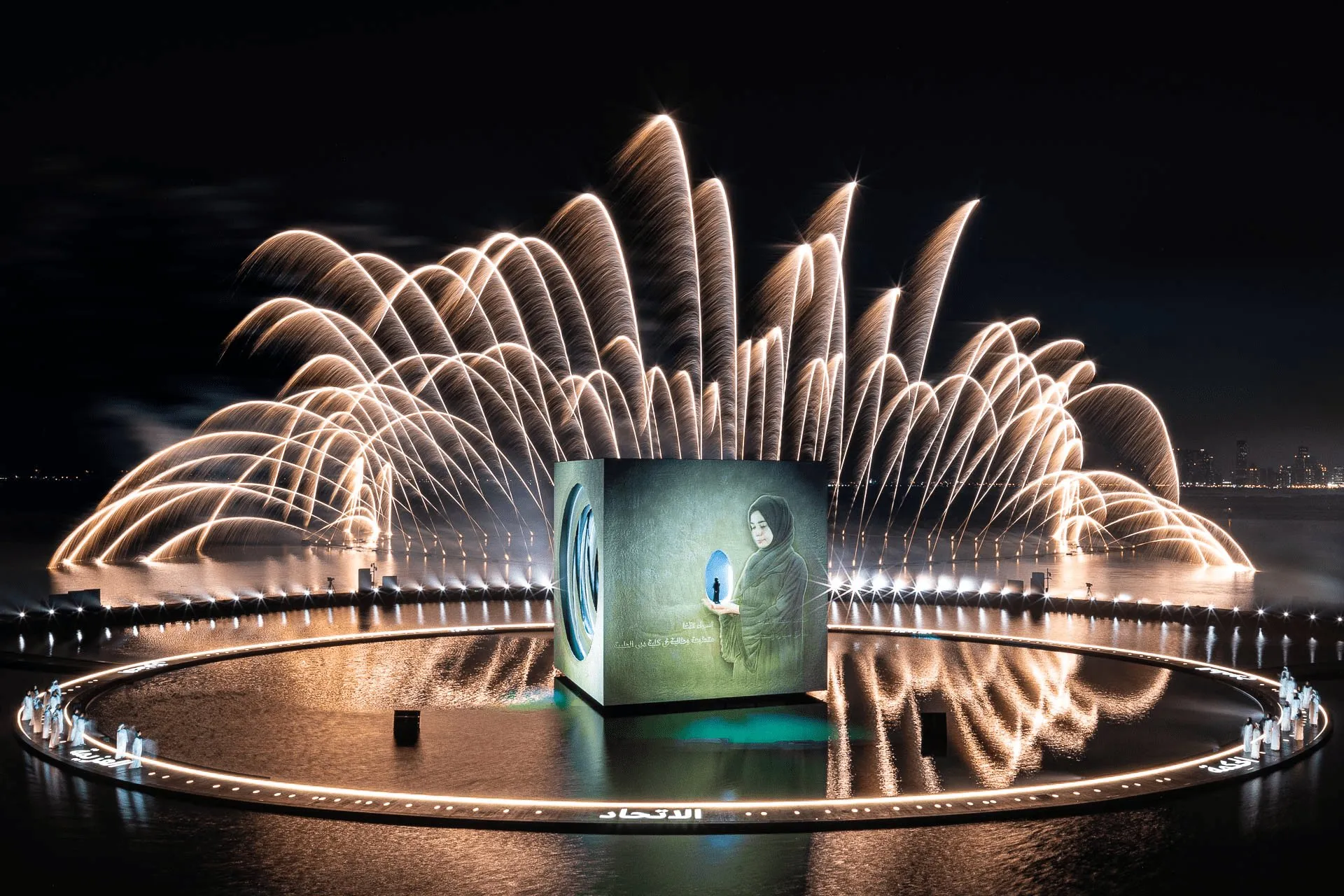
Photo: Nicolas Chavance
The Seed of the Union
The UAE’s 49th National Day, 2 December 2020, on the still water off Jubail Island.
- Client
- UAE 49th National Day
- Surface
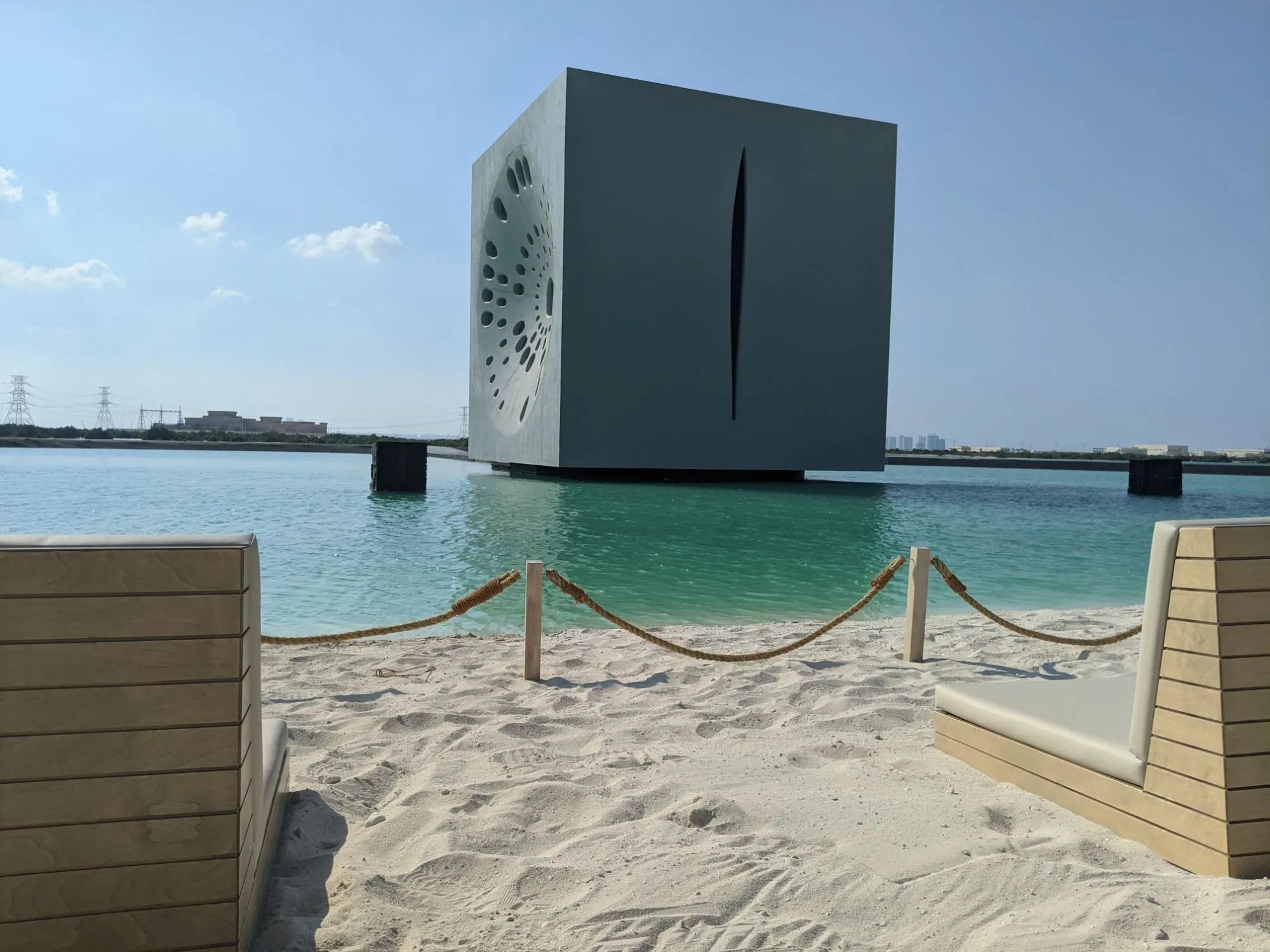
- Rotating cube, 15 m a side, 150 tonnes
- Technology
- PHOTON and ALBION on 4 servers 12 4K projectors 12 calibration cameras Stage One automation
- Calibration
- Less than 5 min for every projector and camera
- Collaborators
- Es Devlin (Show Design) Luke Halls Studio / Charlie Davies (Content) Bruno Poet (Lighting) Auditoria (Audio Design) Stage One (Scenic & Automation) LGME (Production)
- VYV services
The challenges
What we did
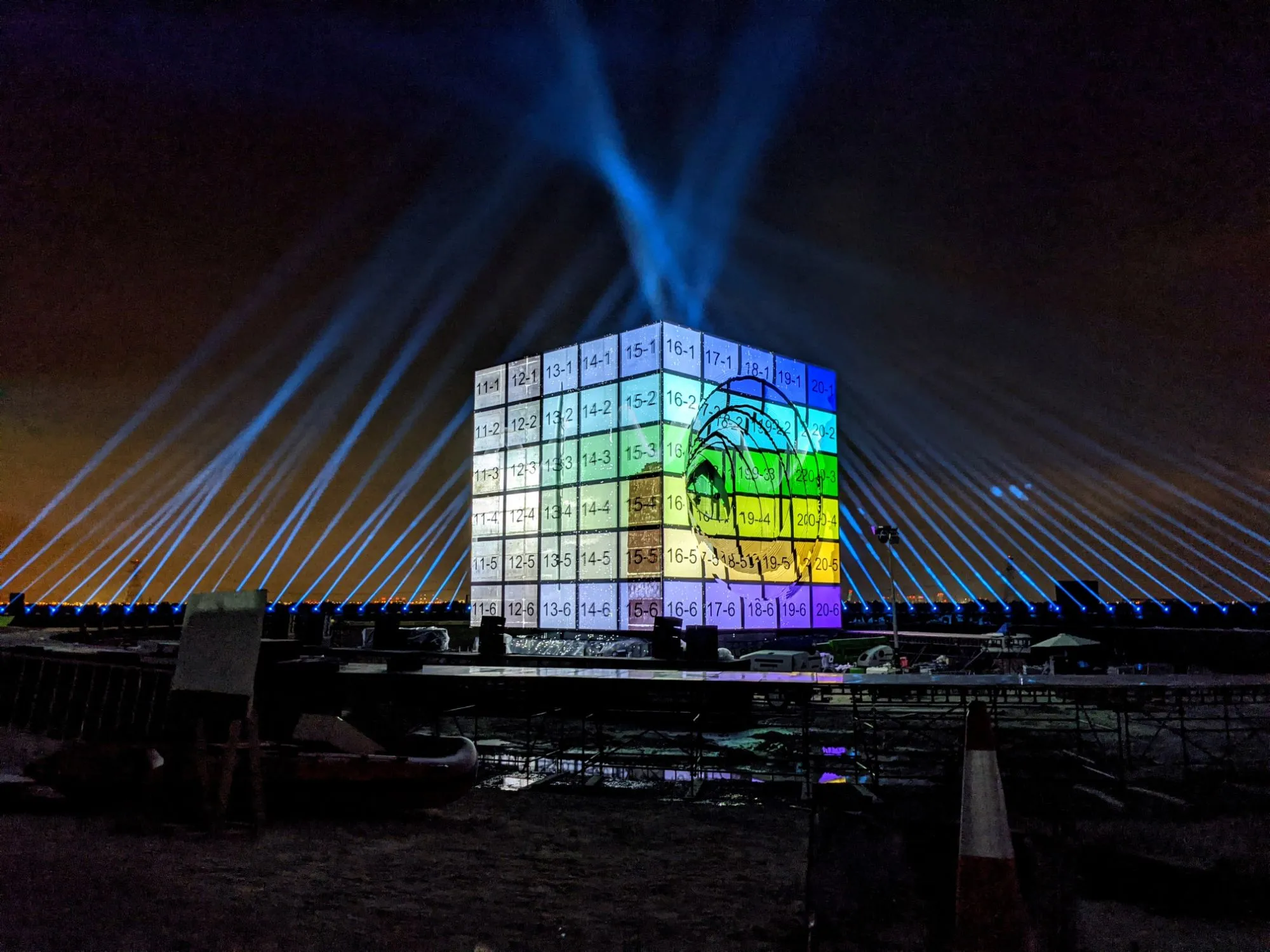
Cover a cube with sharp edges and freehand-cut openings, turning on the water, with no shadow, seam or hole.
Model from CAD drawing. The production CAD data generated the model, fine-tuned on site for a perfect end result.
Work in a highly sensitive nature reserve, always respecting its rare habitat, while still building an artificial island in just a week, at the height of the COVID pandemic; then track the cube during an amazing sunset, when the sun’s infrared light drowns out optical tracking markers.
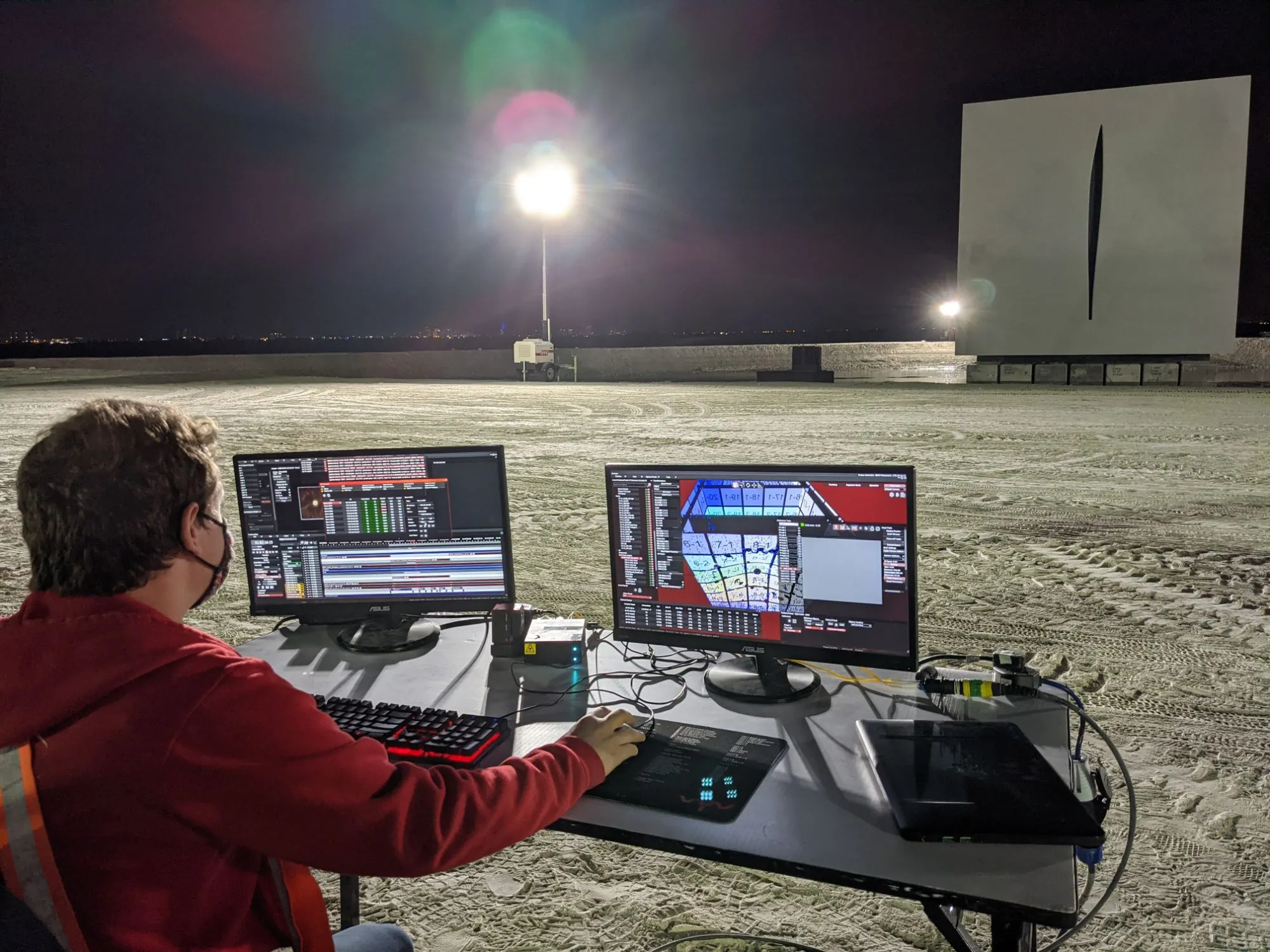
Automation data as tracking. The cube’s position came straight from Stage One’s automation console: in Montreal, the team added support for its newest data protocol to PHOTON in a few days.
Keep the show running for the public on the beach after the event, with no VYV team on site.
One-button operation. A setup anyone can run: one button to calibrate every projector and camera in less than five minutes, one button to play.
Why these choices
A show so good it had to stay, when it was never planned to. A complex tracking element like this would normally need a highly skilled crew to run it. Not with PHOTON: local operators were trained in just a day, and they ran the shows and calibrated the projectors with ease.
Behind the scenes
Permanent shows
Every night, for years.
A permanent show runs every night long after the people who built it have gone home. Nothing in it may depend on someone remembering how it works.
Long-running shows, long-standing clients. Among them, the Quartier des Spectacles in Montréal has run on our servers since 2011, MJ One since 2013, Saint Louis Union Station since 2014, and The Han Show since 2014. The partnership doesn’t end on opening night.
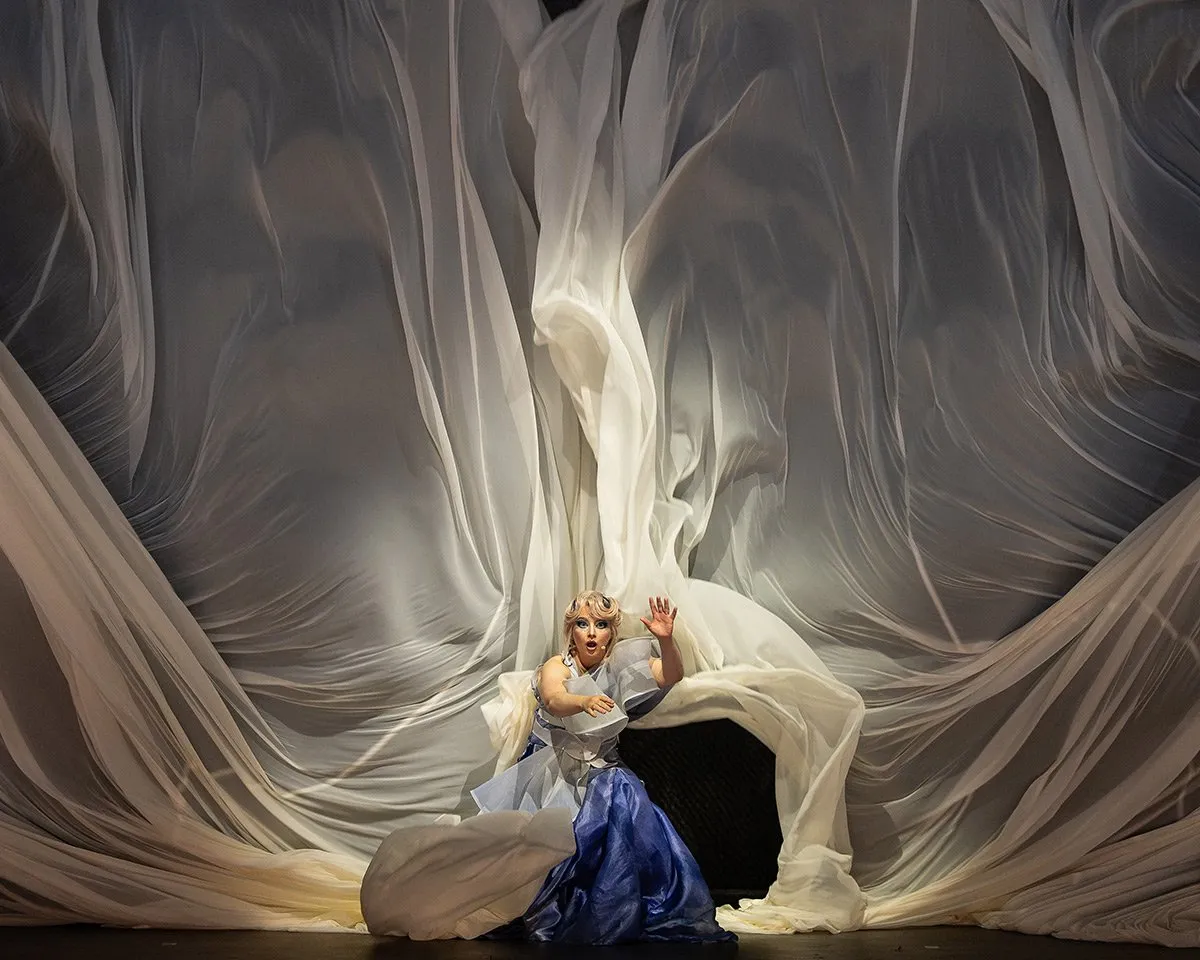
Photo: Anne-Marie Forker
Alizé
Cirque du Soleil’s first resident show in Europe, produced with Live Nation at the Theater am Potsdamer Platz in Berlin since November 2025.
- Client
- Cirque du Soleil · Live Nation
- Surface
- 3 LED walls in 10 bits (main backdrop, false backdrop, false floor) 2 projection canvases (walls and proscenium, stage) 67.8 million pixels in all
- Technology
- PHOTON and ALBION on 12 servers 16 projectors · 84 moving lights 34 cameras 21 COPERNIC emitters · 2 lidars 17 performers tracked 16 custom FX Graphs 1 TB of 16-bit EXR sequences
- Calibration
- 20 min to calibrate the whole theatre
- VYV services
The challenges
What we did
Make three LED walls look like scenery rather than screens.
LED as scenery. Three LED walls in 10 bits, calibrated in colour and brightness until they stop looking like screens and start looking like scenery.
Keep the image on the set while two projectors ride moving platforms.
Mapping on moving projectors. Two projectors ride moving platforms and keep their image on the set as they travel.
Follow seventeen performers through acrobatics and contortion.
COPERNIC emitters in costumes. Built into costumes, they hold through acrobatics and contortion, followed by eighty-four moving lights.
Hold a Pepper’s ghost in alignment across the whole stage.
Precision alignment. VYV worked with the scenic, automation and rigging teams through every micro-adjustment, until the reflected LED wall lined up within 2.8 mm and held for the whole show.
Bring to the stage the video magic the directors and the video designer imagined.
Custom FX Graphs. Sixteen FX Graphs built for the show in PHOTON, with custom tools for video and tracking.
Fit the whole system into an existing theatre, hidden from the house.
Projection and tracking study. Their places were worked out in preproduction, before anything went in.
All of it was built to run without us.
Hand-over training. The operating team was trained until the show was theirs, and VYV supports it after opening, when required.
Why these choices
A show that plays every night, for years, has to be repeatable and still able to evolve, and everything in it was built for that. Concepts were validated in previsualization at Cirque du Soleil’s headquarters before reaching Berlin, PHOTON was extended with tools built for this show’s effects, and its automation and tracking data went to lighting and sound.
Behind the scenes
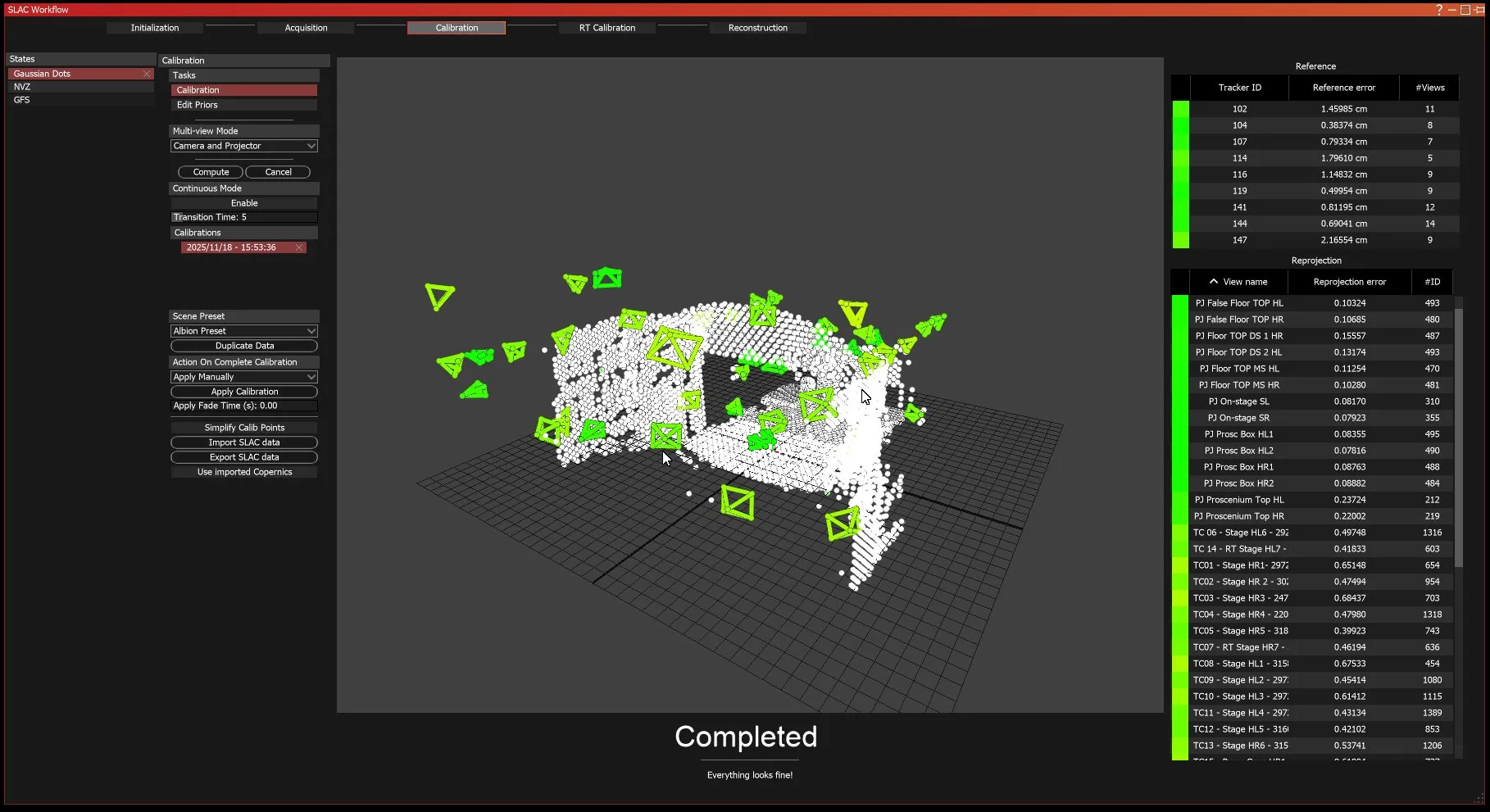
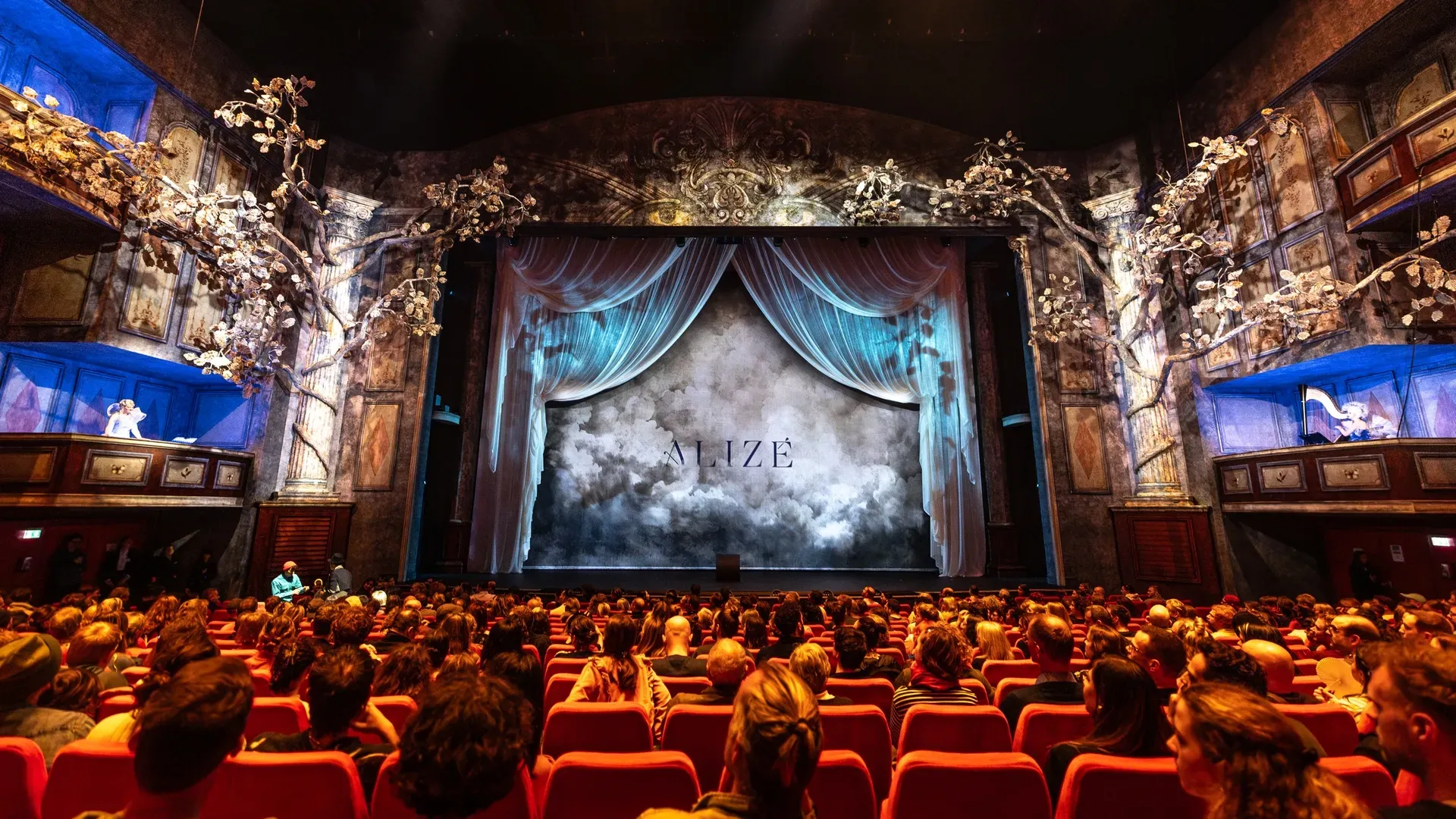
Photo: Anne-Marie Forker
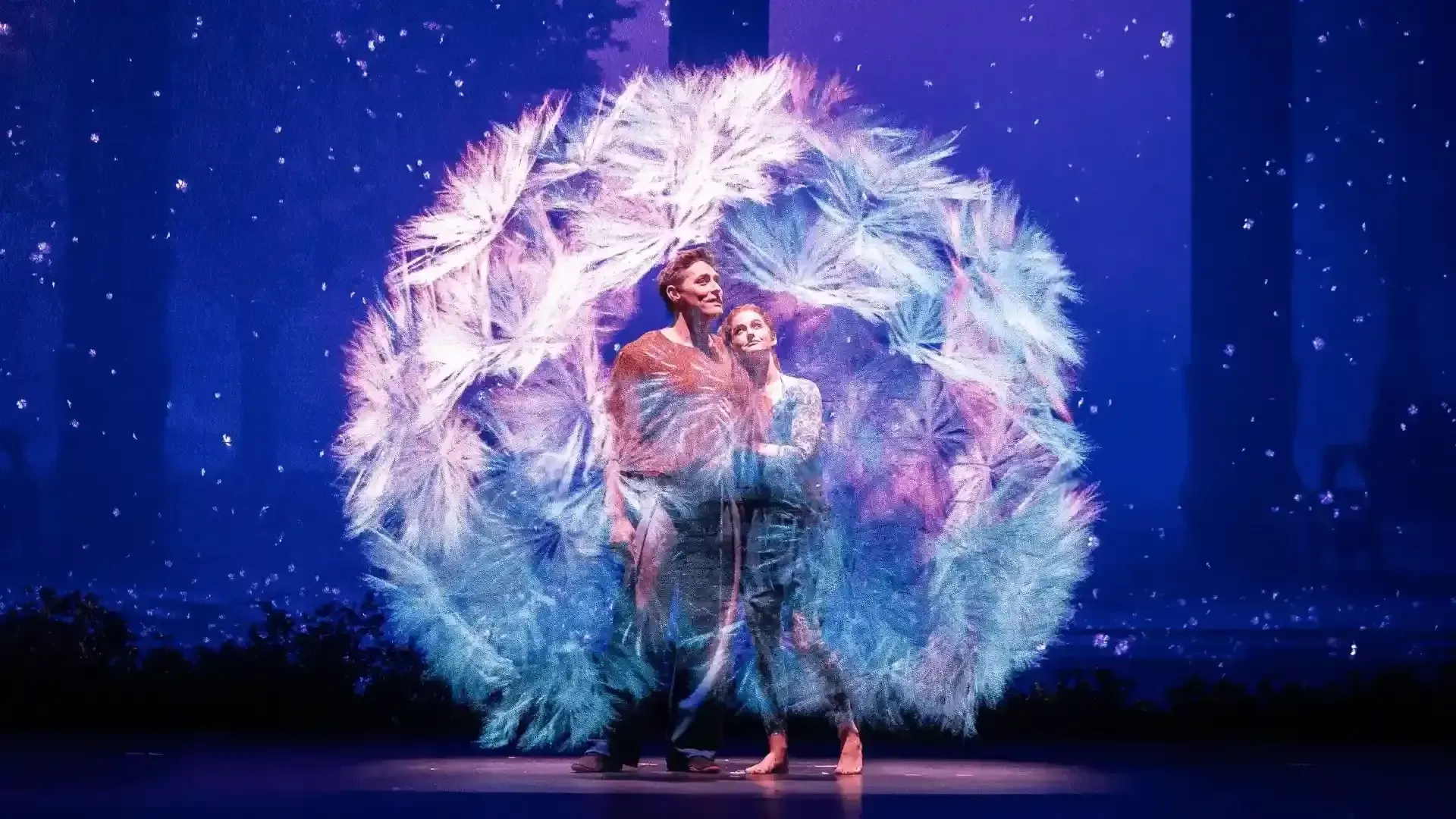
Photo: Anne-Marie Forker
Theatre
Less of everything, except ideas.
A theatre show usually runs for weeks, not years, often on a leaner budget. It needs equipment that does more, and software flexible enough to follow the director’s ideas from one week to the next.
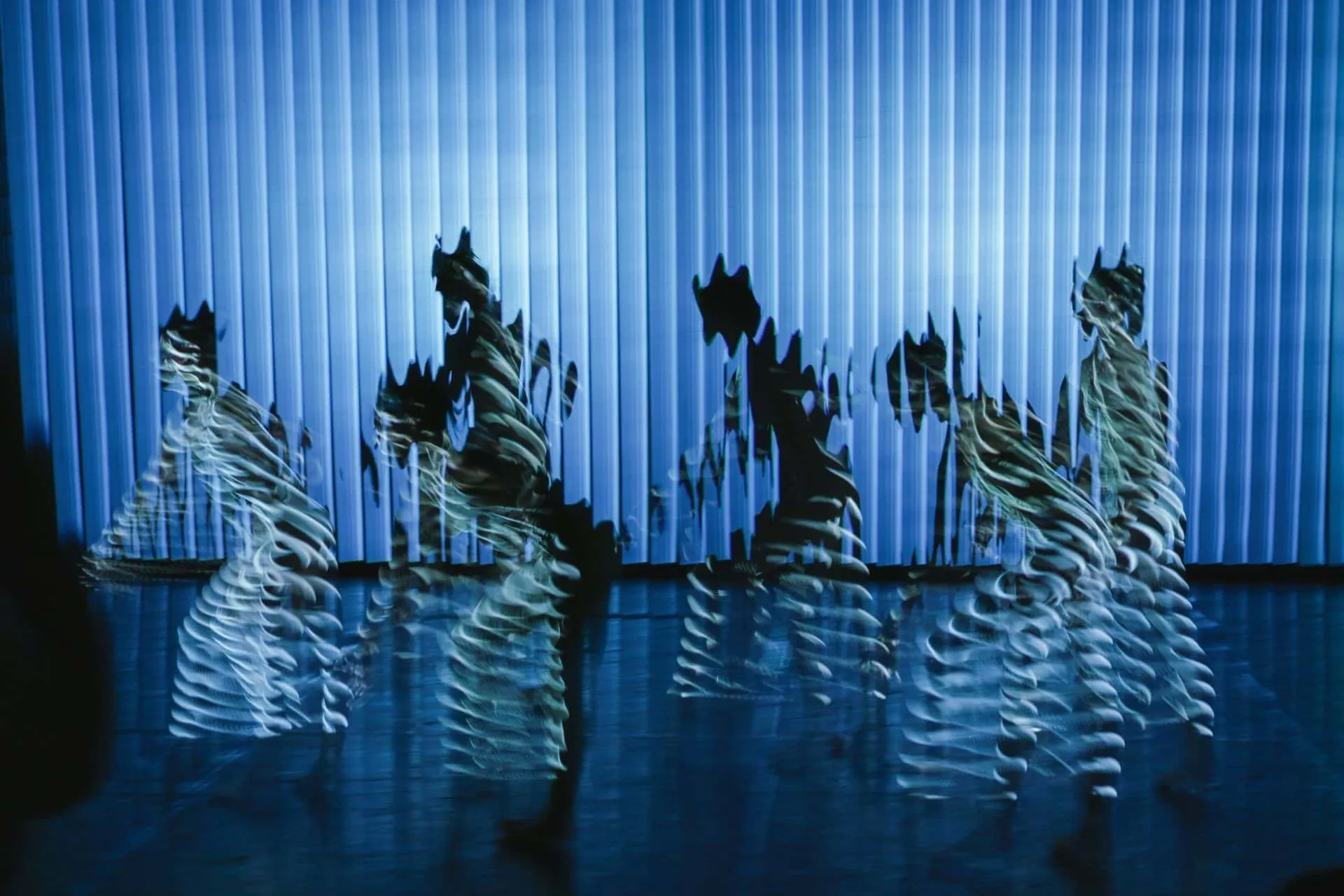
Photo: David Leclerc (Ex Machina)
Frame by Frame
Norman McLaren’s films, put on a ballet stage for a ten-day run in June 2018. Robert Lepage directed, Guillaume Côté choreographed, and the raw material was the optical effects the animator made by hand in films such as Pas de deux and Synchromy.
- Client
- Ex Machina · The National Ballet of Canada · National Film Board of Canada (NFB)
- Surface
- Several screens An LED screen split into 12 wireless sticks
- Technology
- PHOTON on 1 server 6 projectors 2 cameras Around 60 live effects
- Collaborators
- HUB Studio (Video Design)
The challenges
What we did
Recreate McLaren’s optical effects live, with no room for a large rig.
Live capture into effects. Two cameras captured the dancers’ silhouettes and the objects they carried, and ran them through some sixty effects: McLaren’s optical printing redone as it happens.
Throw the images back across several screens with little equipment.
Multi-surface projection. Six projectors across several screens, from a single server.
Let the dancers carry a screen across the stage.
A screen in the dancers’ hands. An LED screen split into twelve wireless sticks, carried across the stage and fed by the same system.
Robert Lepage works by seeing: an idea on stage, then the next one.
Flexible FX building. The video designer, Thomas Payette of HUB Studio, chose PHOTON for that pace.
Why these choices
Years before Frame by Frame, VYV’s creative and development team had built a series of real-time digital effects that mimic McLaren’s optical printing, so that it could be used in live performance. Thomas Payette, a long-time collaborator who knew VYV’s systems and had worked with Robert Lepage’s theatre company, chose PHOTON for the project.
Behind the scenes
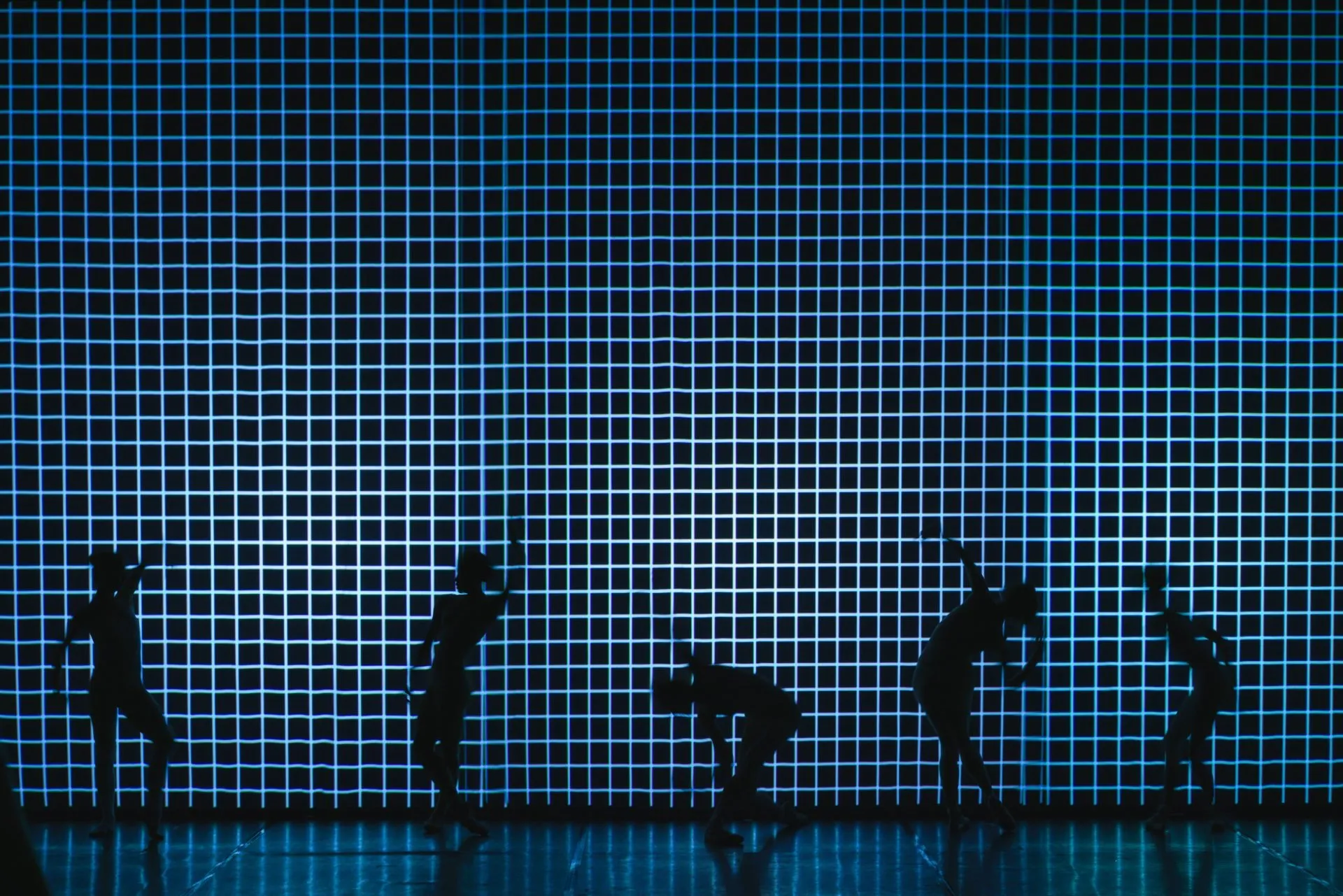
Photo: David Leclerc (Ex Machina)
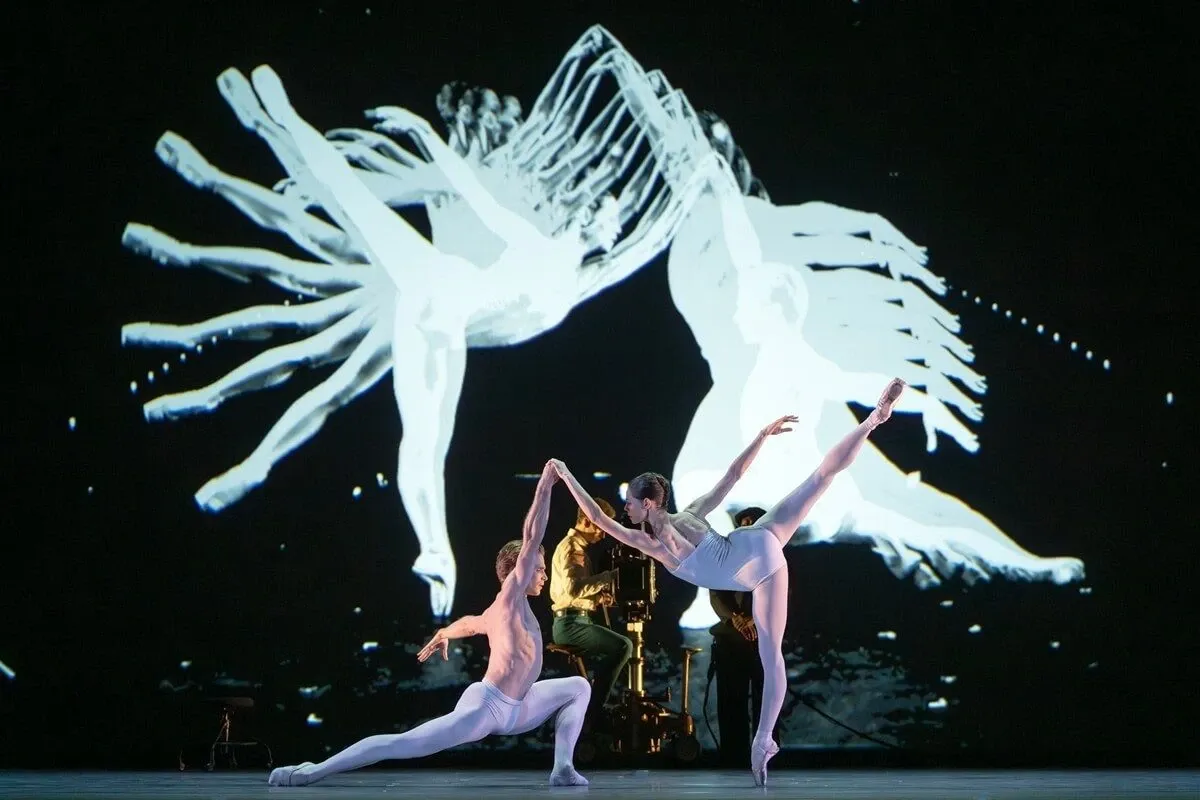
Photo: Karolina Kuras
In their words
PHOTON is one of the industry’s most versatile and powerful creation tools. It surpasses classic media servers as its design focus is not a strictly restricted technique but also covers creative needs, notably through its flexible fx-building system. When working with Robert Lepage, things have to move quickly. He is a demanding stage director who rapidly generates visual ideas and needs quick on-stage feedback. PHOTON was the perfect tool for this production context.
From our photo wall
Talk early, avoid the headache
Brought in early, we can optimize the solution instead of fixing it: getting more out of the same equipment, and catching problems before they reach the stage.